Grace Hopper’s Nanosecond: The Physical Lesson We Forgot
She handed out wire segments to teach latency. Today’s engineers think the cloud is magic. Physics hasn’t changed.
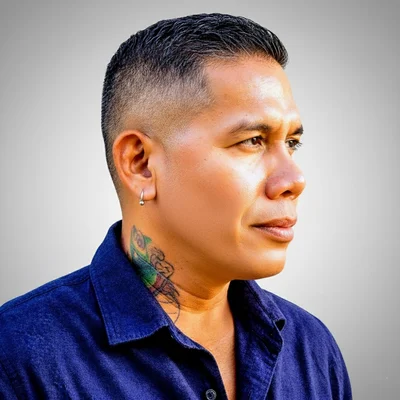
Independent AI Systems Researcher & Systems Architect
I research reliable machine agency, test-time compute, and channel-hardened acoustic intelligence, grounded in decades of building complete systems: models, agents, speech, infrastructure and hardware.
Editor, RoamingPigs Field Manual · Independent technical publication · the story behind the name
No Reality Check slots open for Q4 2026 · $15,000 fixed
Three engagements. Published prices. Selective.
$15,000 fixed
A 90-minute deep-dive on the decision you’re facing, plus an 8 to 12 page written assessment within 48 hours. The entry point for everything else.
Details →from $50,000
Architecture review, voice AI / ASR system review, or a scoped technical rescue. Five to ten business days. Scope and price fixed during the Reality Check.
Details →from $75,000
Pre-acquisition or pre-investment technical review. A defensible written report for your investment committee, board, or LP.
Details →Systems that taught me what works and what doesn’t
Architected a push platform load-tested to 30 million sustained concurrent connections across 3,000 AWS instances without failure. The architecture was designed around a billion-connection target.
Deployed speech recognition for the US Coast Guard and DHS in environments so noisy that standard ASR failed. This wasn’t a demo; lives were on the line.
The voice system could hear a radio. It could not key one. I designed a passive adapter that keys push-to-talk with an audio tone instead of a switch closure, so the software could transmit through a plain headphone jack, with swappable tails for each radio’s accessory connector. It enabled send and receive, and it extended the life of the project.
IP that had never been protected surfaced late in diligence. The buyer renegotiated and $40M closed at $28M. A 30% haircut, and the discount this work exists to prevent, on either side of the table. For a live deal, a CodeProvenance.ai preflight puts evidence from the target’s own code in front of you in days, without its source leaving the building.
Acoustic intelligence for the places standard ASR gives up: Coast Guard radio, factory floors, anywhere the noise floor eats the signal. In development. The next scar in progress.
Financial advocacy platform plus a product family of 20+ surfaces under one federated identity hub: the abundera.ai core, QR, QR Check, QR Pro, Sign, Research, and 14 vertical advocacy sites. Plaid-connected, passkey-only. Built solo and funded. Shipped from zero in months.
Built MSNBC’s publishing platform starting in 1995, when web CMSs were barely a category. The web was still young and everything was being invented.
I toggled my first program into an Altair via front-panel switches in the late 1970s, entering machine code by hand, one bit at a time. In the 1980s, I ran BBSs when "online" meant dialing in at 300 baud. In the 1990s, I had two full T1 lines running into my house (3 Mbps total, when most people were on dial-up) because I was running servers before "the cloud" existed.
I have never stopped working below the software line. I write firmware, I design and prototype circuits, and I have taken boards from schematic through fabrication into products that shipped. I don’t have an EE degree. I learned it the way I learned everything else on this page, which is by building the thing and finding out where it fails. There is a bench in Las Vegas where I can prototype most any circuit I need.
I spent the 2000s surviving the crash. I spent the 2010s fixing the messes left by "move fast and break things."
I served aboard the USS Missouri during Desert Shield and Desert Storm. The Navy taught me that systems don’t care about your feelings. If you ignore physics, ships sink. If you ignore economics, startups die.
I have two heroes. The first is David Ahl, who wrote the BASIC games books that got me started programming at about seven years old. He ran education products at DEC and then founded Creative Computing magazine. I finally wrote to thank him, in 2022 and again in January 2025, and I was glad to find him still around. The second time he answered the next day. He was pleased the books had been useful, and said he had always meant the games as a way to teach programming first and to entertain second.

The other is Rear Admiral Grace Hopper. When officers asked why satellite links were slow, she handed them a piece of wire 11.8 inches long, the distance light travels in a nanosecond. Physics does not negotiate. She served in the Navy until she was 79. I wrote about her at the Field Manual, and I wish I had understood that wire decades earlier.
Both made a hard thing easy to see, which may be why I keep building things that explain themselves.
I don’t sell “digital transformation.” I sell reality checks.
The Constitution I Work By
Latency is bounded by the speed of light. Grace Hopper carried the proof around as a piece of wire. Cost is bounded by supply and demand. Agile and vibe coding change neither, and I have sat in the meetings where somebody tried.
Every line of code you write is a line you have to debug, secure, and upgrade. Most of the useful advice I have given has been talking somebody out of a feature.
I don’t have a certificate that says I know how to scale. I have the scar from a load test that drove my system to 30 million sustained concurrent connections and didn’t break it.
Vendors oversell and dashboards flatter. My job is reading the code behind the demo and the invoice behind the dashboard.
Beautiful systems that lose money aren’t beautiful. Ugly code that prints cash is a masterpiece. The QR tools started because a friend was quoted $46 a month for something that costs nothing to serve.
I’ve watched the same mistakes play out across the dot-com crash, the blockchain bubble, and now AI. I ran a consulting shop through the first one, which is why the third feels familiar rather than new.
Forty-five years of it. These five explain the rest.
Three of them here. The rest are on the ventures page.
 Abundera
Financial advocacy platform. Analyzes your full financial picture and acts on your behalf — catching overcharges, drafting dispute letters, flagging billing errors, negotiating medical bills. Plaid-connected, passkey-only, and the federation hub for the QR and Sign family.
abundera.ai → Barbarians
Software studio for startups. Building products that work, not products that demo well.
barbarians.com → RoamingPigs
Independent technical publication. Home of the Field Manual: 170+ articles on what actually works in tech.
roamingpigs.com →Models, agents, speech, infrastructure, and hardware, with measurements and project status alongside the claims.
I build across the whole AI system: the model, the tools it uses, the infrastructure it depends on, and the hardware it operates. Echo coordinates coding agents across vendors and machines. TuneHarness (formerly VastOps) checks rented GPUs and tracks training costs. Bootscry gives agents access to a physical console when the target OS is unavailable. The AI page separates operating tools, documented demonstrations, and research, and includes the speech benchmark that changed my plans.
My independent AI research agenda connects AMBIE acoustic-model research, ThermoCog’s energy and computation design, Noise or Voice’s experimental detector, and TuneHarness’s specialist-model experiments. A new verifier-reliability proposal extends that work into inference-time reasoning; a completed 120-task verifier engineering pilot informs the proposal, while its H1 joint-verifier study remains unrun.
Interactive explanations of difficult machines. 117 built, five on the bench.
A hole punched in card stock in 1928 and a neural network trained in a browser tab are the same idea a century apart. Everything in the studio sits somewhere on that line, and all of it runs. The numbers are live, the failure modes are the real ones, and nothing is faked for the screenshot.
Pieces are sized in three tiers. A bit is one idea, about a minute of your time. A nibble is a single mechanism you can take apart and put back together. A byte is a whole machine, big enough to earn its own domain.
Five more are on the bench.
Lessons from 45+ years of building systems that work
She handed out wire segments to teach latency. Today’s engineers think the cloud is magic. Physics hasn’t changed.
The industry solved "big ball of mud" by creating a distributed big ball of mud. The complexity didn’t disappear—it just got harder to debug.
Every accuracy claim on that slide deck was measured under perfect conditions you’ll never have. Here’s how to test what they won’t show you.
Seventy-three more provisional applications are on file across the Abundera product family. The USPTO does not publish provisionals, and they stay confidential unless a later application or granted patent makes one accessible, so you can't verify these today the way you can the four above. Ask, and I'll show you the receipts.
The person behind the reality checks
Before MJ and I left the country in 2015, I had a retro gaming collection that filled a room and an 8,000-book library. Then we traveled the world for over eight years, hiking, biking, riding mopeds and eating our way through country after country. We called ourselves the RoamingPigs because we loved to travel and eat, and I will still eat pretty much anything, anywhere. The games, books, manga, old computers and the pepper business have their own page.
I am expensive because I am fast, and I am fast because I have seen your problem before. If you want a "Yes Man" to validate your roadmap, hire a Big 4 consultancy. If you want to know why your cloud bill is $50k/month or why your AI agent is hallucinating, call me.
Book a Reality Check[email protected]